Parasite Alert: Central Oregon veterinarian urges dog owners to de-worm pets

BEND, Ore. (KTVZ) -- A local veterinarian is encouraging dog owners to keep their pets up to date on de-worming medications following the discovery of a potentially harmful parasite in the Pacific Northwest.
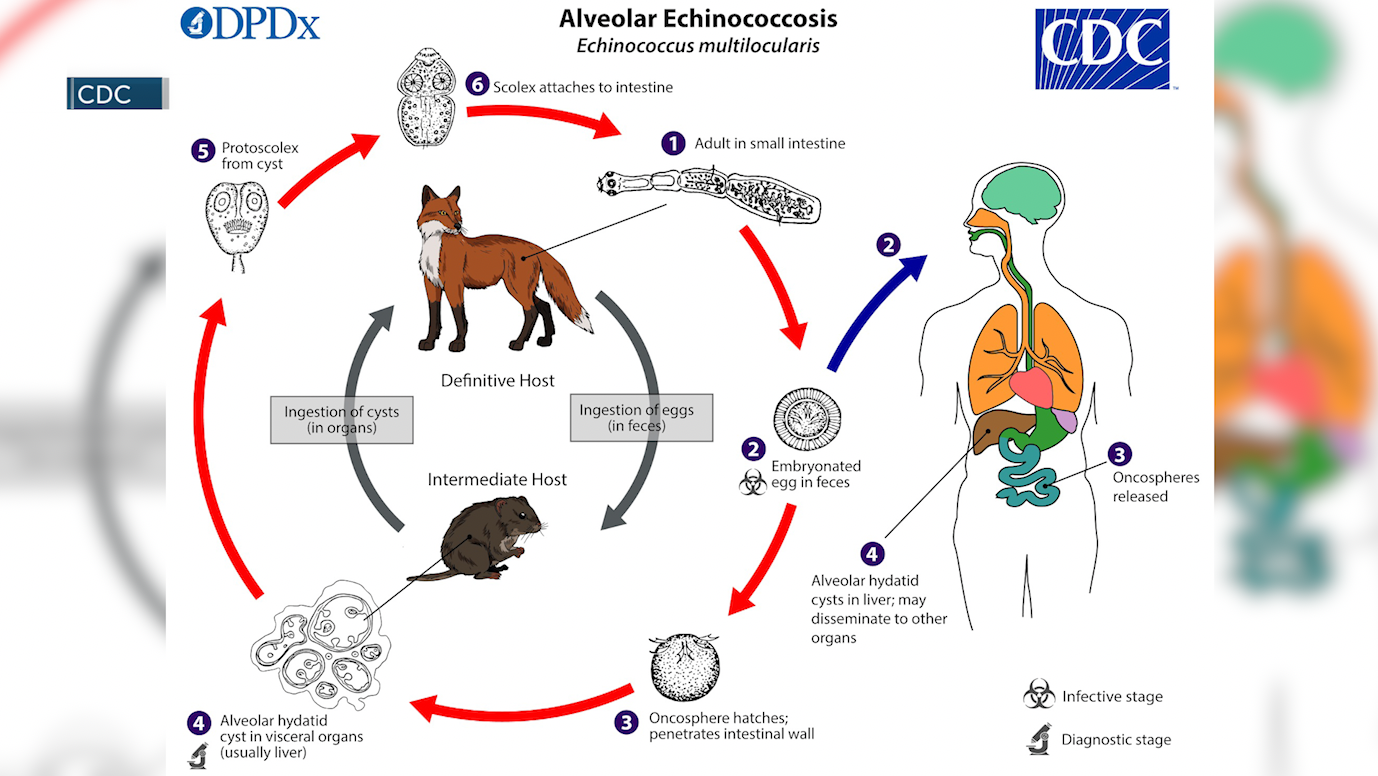
The parasite, Echinococcus multilocularis, is a tiny worm that has been spreading across North America, often without people realizing it exists. It can survive in soil throughout the winter and is raising concerns about exposure.
Dr. Rex Urich, owner of Mt. Bachelor Veterinary Hospital in Bend, says the parasite is not new globally. It has long been common across Europe and Central Asia and has been present in Canada for some time. More recently, it has been detected in Washington State and parts of northern Oregon.
“It's ubiquitous all over Europe and Central Asia. It's really common. It's existed in Canada for a while," Dr. Urich said. "The organism can live through the winter in the soil. It doesn't die out. You can't clean fabric and materials with regular laundry soap and kill it. You have to bleach it. Probably the most vulnerable are children that are crawling around on the ground and people that are immunocompromised."

The parasite lives in wild animals like coyotes, but it can sometimes reach pets and humans.
“All dogs. Canids, foxes, wolves, coyotes, domestic dogs. This is almost a normal parasite, and it doesn't cause a lot of problems for them," Dr. Urich said.
However, the situation changes when the parasite infects what experts call an “abnormal host,” such as humans or certain small animals. In those cases, the parasite cannot complete its lifecycle and instead becomes lodged in the body.
"When it gets into an abnormal host, people being one, the parasite figures out, 'Uh oh, I'm in the wrong animal.' And it doesn't complete its lifecycle, and it stops where it is," Dr. Urich said. "It gets in the liver and causes tumor-like things in the liver and also in the lungs and in the brain."
Researchers at the University of Washington have confirmed the parasite’s presence in the Pacific Northwest. They surveyed 100 coyotes in the Puget Sound region, and found the parasite in 37 of them.

Despite the findings, Dr. Urich emphasizes that there is no need for panic. There are things you can do to protect your pets and yourself.
“It’s not a big epidemic,” he said. “But common sense goes a long way—sanitation, limiting exposure, especially for children, and regular monthly de-worming is probably the best advice I can give."

He recommends using a monthly de-wormer that specifically targets tapeworms, noting that consistent protection is key. While some products last longer, ongoing coverage is preferred.
Pet owners are also advised to be cautious when cleaning up after their dogs. Proper disposal of pet waste and maintaining clean outdoor spaces can help reduce the risk of spreading the parasite.
“There are even services in town that help with pet waste removal,” Dr. Urich noted. “They’re aware of this disease and understand the precautions needed to limit its presence in the environment.”

Veterinarians say that with regular care and attention, pet owners can significantly reduce the risk to both their animals and their families.
Click here to read the University of Washington's report.
