How QR Codes level the playing field for brands in January

MilanMarkovic78 // Shutterstock
What kills January resolutions: lack of willpower or too many steps?
Approximately 43% of people abandon their New Year’s resolutions before the end of the month. This may not be because they stop wanting to change but that getting started requires too much setup. And if those resolutions involve trying a new brand or service? The friction multiplies. Download this. Create an account. Verify your email. By the time someone’s ready to begin, the motivation has already cooled.
January gives brands access to people actively trying to change their routines. What determines who wins those customers is the distance between interest and action. A QR Code starts the experience instantly, while five extra steps send people elsewhere. That difference matters.
Uniqode examines how QR Codes reduce friction in customer onboarding.
Why scan-to-begin wins in the first moments of the year
Scan-to-begin works because it removes decisions from the starting moment. There is no need to remember a URL, search for the correct page, or choose between options. The next step is clear.
By collapsing multiple actions into one, scanning reduces early drop-off at the point where attention is most fragile. People move forward before hesitation sets in, which is crucial when motivation exists but patience is lacking.
This approach naturally fits into physical environments such as gyms, retail stores, workplaces, airports, and shared spaces, which are often filled with brief pauses where people decide what to do next. A well-placed QR Code turns those pauses into starting points.
For brands, early scans surface what people are trying to change. For consumers, scanning creates a clear place to begin at a moment when progress matters more than exploration.
How scan-to-begin plays out across industries
Across categories, the same pattern repeats. Periods of reset bring more trial behavior, and outcomes may depend less on how compelling an offer sounds and more on how easily people can begin.
1. Retail and CPG
Shopping behavior in January turns towards experimentation. New brands are tested, and staples are reconsidered. Engagement often stops at the shelf when learning more or registering a product requires extra effort.
QR Codes extend the moment of consideration beyond the purchase. Packaging becomes a path to product education, registration, savings, or brand ecosystems without forcing immediate commitment.
How brands are doing it: L’Oréal uses QR Codes on product packaging to connect buyers to its digital ecosystem, increasing app downloads and registered usage.
2. Travel, hospitality, and local experiences
The new year often comes with resolutions to travel more. Planning activity increases as people explore trips, memberships, and experiences. Friction appears when access to services, check-in, or information depends on downloads or long forms.
Scanning smooths the transition from planning to participation. Guests complete precheck-in, confirm details, or access services directly in the browser.
How brands are doing it: MyCloud Hospitality uses QR Codes to guide guests through digital check-in and service flows, reducing reliance on front-desk interactions and app downloads.
3. Gyms, fitness, and wellness
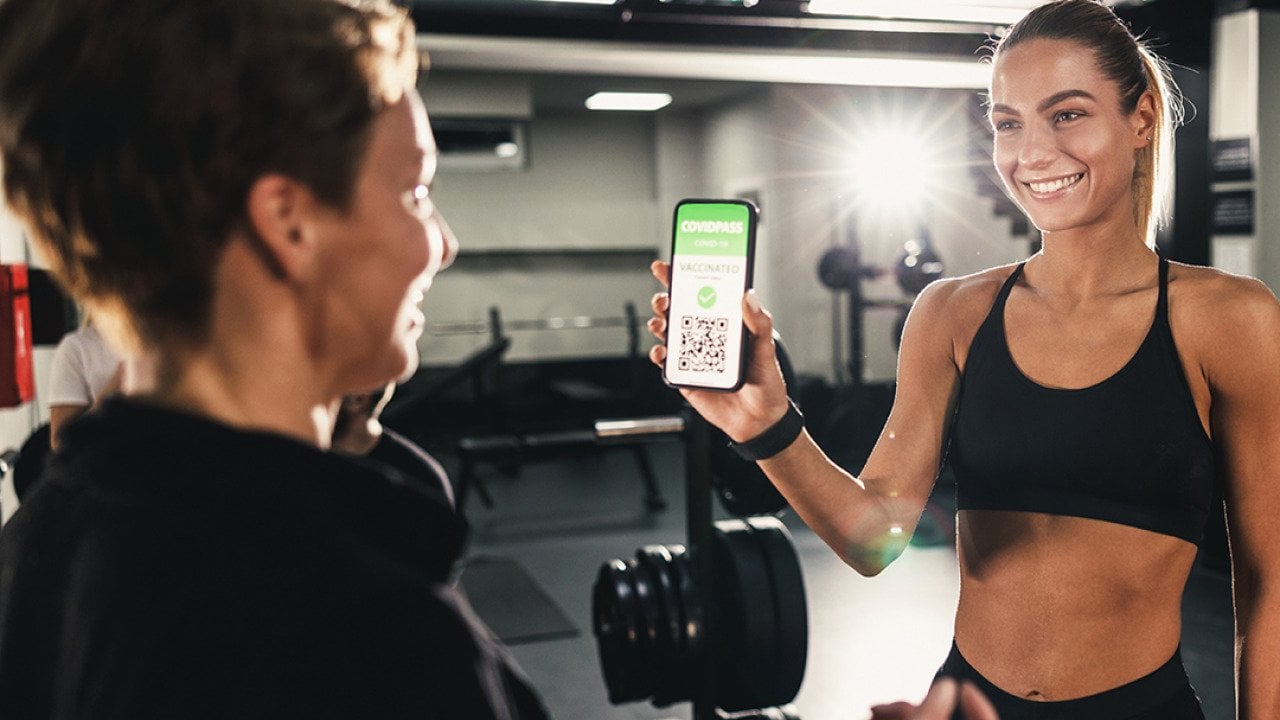
Trial behavior dominates early-year gym visits. People want to understand schedules, pricing, and routines before committing. Friction shows up at the front desk, in lengthy forms, or through mandatory app downloads.
Here, QR Code scanning functions as a low-pressure entry. Access to trials, memberships, or onboarding opens immediately on the phone, allowing people to proceed without administrative overhead.
How brands are doing it: PushPress enables gyms to generate QR Codes for new members so they can scan, select a membership, and complete sign-up in a single flow, using information saved on their device.
4. Financial services and banking
The end of December and early January often trigger financial housekeeping. People reassess accounts, tools, and workflows. Drop-off often occurs when onboarding requires document uploads, device switching, or identity verification.
Scanning shortens this initial interaction. Customers can proceed directly to secure verification or setup without needing to navigate across pages or devices to view progress.
How brands are doing it: Financial institutions using OneSpan technology display secure QR Codes during desktop onboarding, allowing customers to register mobile authenticators without interrupting the account-opening flow.
5. Workplaces and community spaces
January brings a surge in onboarding, and new employees, students, or members need clarity quickly. Friction shows up as confusion, missed steps, or delayed access to tools and resources.
A well-placed QR Code links people to training, policies, schedules, or systems at the moment they need them, reducing reliance on instructions or intermediaries.
How brands are doing it: Heineken uses QR Codes across its breweries to give frontline employees instant access to work instructions and standard operating procedures during onboarding. Team members scan QR Codes on the brewery floor to learn tasks, capture knowledge, and share updates across teams and sites.
How to design entry points for January behavior
Entry points should be designed when people are actively trying to start something new, and slight delays can be enough cause for a drop-off.
- Define the action that signals intent: Identify the single action that indicates someone wants to begin, such as viewing a class schedule, checking credit card eligibility, or starting a trial. A QR Code should take them directly to that action, not ask for sign-ups, downloads, or additional decisions first.
- Remove decisions from the starting moment: Every additional choice introduces hesitation. QR Code entry points work best when a scan leads directly to a specific next action, such as a form, schedule, or onboarding flow, rather than a menu or generic landing page.
- Design for context, not channels: Start points should align with where intent is most apparent. QR Codes placed on shelves, desks, equipment, or signage work because they meet people at the moment a decision is already forming.
- Shorten the distance between interest and value: The first interaction should deliver something useful immediately, such as access, guidance, or confirmation. QR Code-led entry points help bypass steps that delay the payoff.
- Use early scans as directional signals: Early scan patterns show whether people can start without friction. Adjust destinations, placement, or messaging while behavior is still forming, rather than waiting for longer-term metrics to emerge.
In January, the simplest start wins
January does not create new behavior. It concentrates it. When people are actively trying to change, weak entry points fail more quickly, while well-designed ones stand out immediately.
Scan-to-begin works here because it respects how people actually start. Not by committing, comparing, or configuring, but by taking one small, obvious step. When that step is easy, momentum follows. When it is not, intent disappears.
The same dynamics apply throughout the year. New jobs, new trips, new purchases, and new habits all begin the same way: with a brief window where motivation is high and tolerance for friction is low. January simply compresses those moments into a single, visible period.
Brands that win are not optimizing campaigns for the new year alone. They are engineering beginnings that hold up whenever someone is ready to start.
This story was produced by Uniqode and reviewed and distributed by Stacker.

