Oregon sees highest gas prices in 2026; driven by Iran strikes

(Update: Adding video).
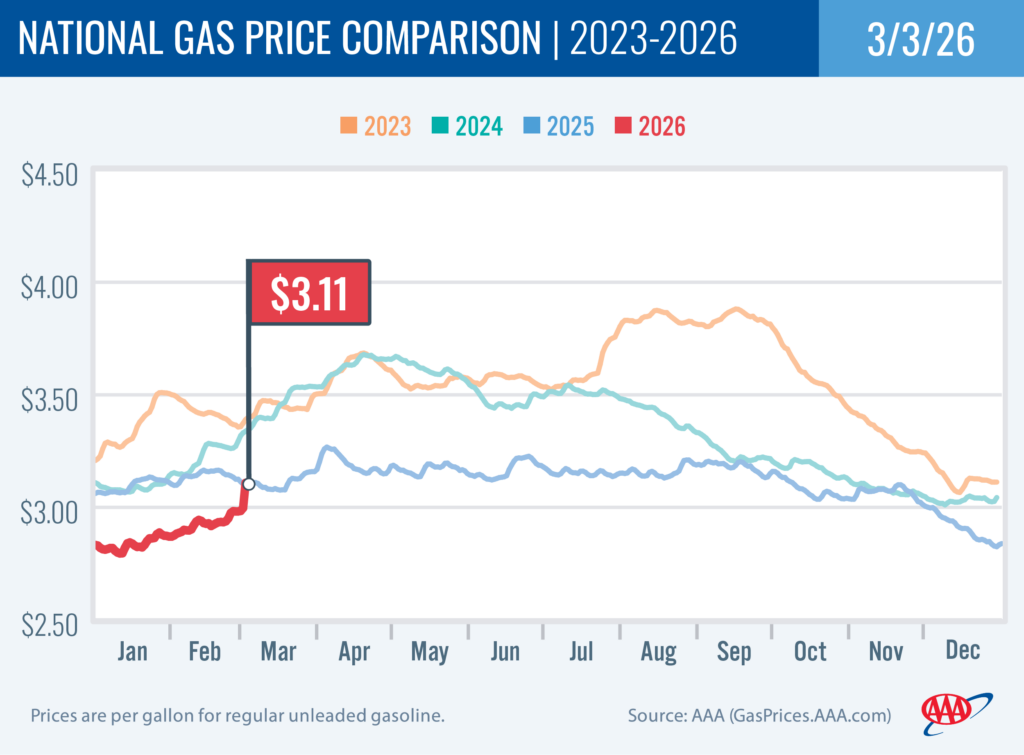
PORTLAND, Ore. (KTVZ) — National gas prices jumped 11 cents overnight to an average of $3.11 per gallon following weekend strikes on Iran by the United States and Israel. This marks the first time the national average for regular gasoline has exceeded $3 since Dec. 1, 2025.
Every state in the country experienced a price increase this week as crude oil prices surged in response to geopolitical tensions and seasonal refinery maintenance. This sudden spike represents the most significant one-day jump in gas prices since the Russian invasion of Ukraine in March 2022.
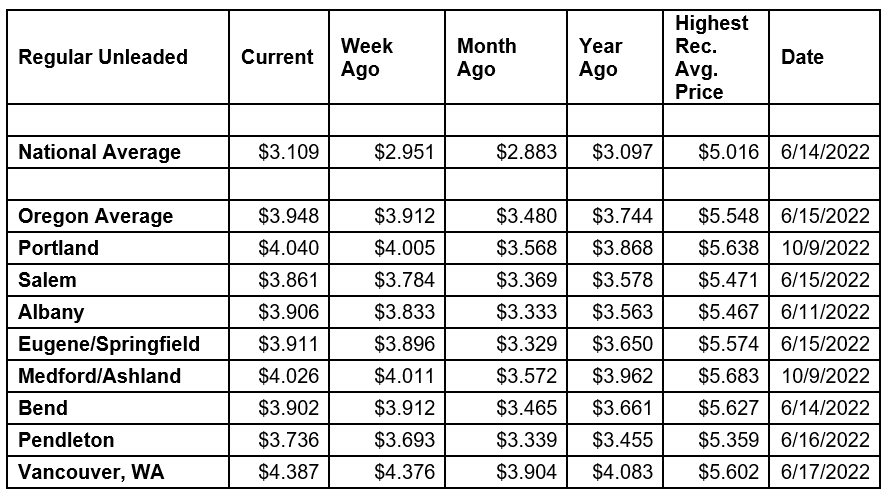
The Oregon average for regular gas rose four cents this week to $3.95 per gallon, which is currently the highest price in the state for 2026. While Oregon and Washington saw some of the smallest week-over-week increases in the country, they experienced the largest jumps in the nation the previous week following an outage of the Olympic Pipeline. Oregon currently has the largest month-over-month price increase in the United States, with averages up 47 cents compared to one month ago.
Marie Dodds is the public affairs director for AAA Oregon/Idaho. She said that a combination of international conflict and domestic production cycles is driving the current market. "The spike in crude oil prices in addition to the normal seasonal switch to summer-blend fuel mean drivers will see higher pump prices. Oregon and Washington were already hit with soaring gas prices after an outage at the Olympic pipeline last month," Dodds said. She added that markets are continuing to monitor developments in Iran and potential impacts on energy infrastructure.
Crude oil prices are currently near their highest levels in nearly two years. West Texas Intermediate is trading around $76 per barrel, a significant increase from $66 one week ago and $68 one year ago. Geopolitical tensions in the Middle East often impact prices because Iran is a major oil producer and approximately 20% of the world's oil and refined products flow through the Strait of Hormuz. While the United States does not rely on Iranian oil, global supplies are affected when nations like China and India must seek alternative sources.
| Rank | Region | Price on 3/3/2026 |
| 1 | California | $4.67 |
| 2 | Hawaii | $4.40 |
| 3 | Washington | $4.38 |
| 4 | Oregon | $3.95 |
| 5 | Nevada | $3.73 |
| 6 | Alaska | $3.64 |
| 7 | Arizona | $3.39 |
| 8 | Pennsylvania | $3.21 |
| 9 | Illinois | $3.20 |
| 10 | District of Columbia | $3.15 |
Domestic factors are also contributing to the price surge as refineries begin the annual switch to summer-blend fuel. This mixture is more expensive to produce and less prone to evaporation in warmer temperatures. Most refineries and terminals must comply with summer-blend standards by May 1, with gas stations required to complete the switch by June 1. Some areas in California require the more expensive fuel as early as April 1. Additionally, the national refinery utilization rate fell from 91.0% to 88.6% last week, while the West Coast utilization rate dropped from 87.4% to 81.1%.
The West Coast continues to have the most expensive gasoline in the country, with seven states from the region appearing in the national top 10. California has the highest average at $4.67 per gallon, followed by Hawaii at $4.40 and Washington at $4.38. These are the only three states where regular gasoline currently averages above $4 per gallon. Experts attribute these higher costs to tight regional supplies, high transportation costs from distant oil production centers and local environmental programs.
U.S. gasoline demand saw a slight decrease to 8.73 million barrels per day for the week ending Feb. 20, down from 8.75 million the week prior. Total domestic supply also fell by one million barrels to 254.8 million. Despite these fluctuations, United States crude oil production remains near record highs at 13.70 million barrels per day. According to the U.S. Energy Information Administration, the price of crude oil accounts for approximately 47% of the total cost of a gallon of gasoline.
OPEC+ announced during its March 1 meeting that it will boost oil production by 206,000 barrels a day starting in April. This increase is intended to help mitigate the impact of the Iran conflict on global oil prices. The cartel previously stated it would not hike production in the first quarter of 2026 due to lower demand.
