Gov. Kotek signs legislation to improve access to mental health and addiction services
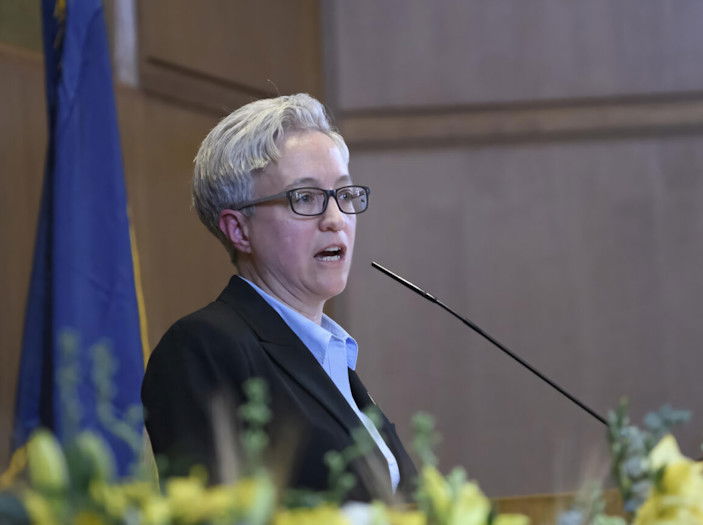

PORTLAND, Ore. (KTVZ) -- Gov. Tina Kotek today signed five bills at the University of Oregon's Ballmer Institute in Portland, Ore., aimed at strengthening Oregon"s behavioral health workforce and safeguarding young people from emerging artificial intelligence technology. The legislation, supported by first lady Aimee Kotek Wilson, legislators, behavioral health providers and advocates, seeks to expand access to mental health and addiction services across the state.
The bills address a pressing need to alleviate the strain on behavioral health professionals and ensure Oregonians in crisis receive timely care.
Oregon's behavioral health system faces a significant workforce crisis, leaving many residents waiting for essential care. The newly signed laws tackle this challenge through four primary measures designed to support the workforce by reducing administrative hurdles, enhancing safety and creating more accessible pathways into the field. Additionally, one bill establishes guardrails around new technologies that pose risks to youth mental health.
House Bill 4083, titled Cutting Red Tape for Behavioral Health Workers, streamlines Medicaid credentialing processes. This allows qualified professionals to begin serving patients more quickly, lessens the administrative burden on providers and expands access to vital clinical supervision. First lady Wilson, who chairs the Behavioral Health Talent Council, stated that this bill is the first to emerge from the Council's work.
"I've spent the past year gathering perspectives from providers across Oregon to hear how the behavioral health workforce crisis affects them and their clients," Wilson said. "House Bill 4083, Cutting Red Tape for Behavioral Health Workers, is the first bill to come out of the Behavioral Health Talent Council's work and reflects what workers told us they need to stay in the field and continue serving their communities."
Shyra Merila-Simmons, executive director of Clatsop Behavioral Health, described the impact of the crisis on rural providers. She noted that professionals often face unnecessary delays in providing care and that hiring licensed clinical supervisors remains a challenge. Merila-Simmons emphasized the bill's importance for streamlining credentialing and reducing administrative burdens, particularly for rural communities needing flexibility to ensure associates receive clinical supervision.
"As a rural provider serving Oregon Health Plan members, I see the workforce crisis up close every day," Merila-Simmons said. "Professionals that are ready to provide care are stuck in unnecessary holding patterns and we struggle to hire licensed clinical supervisors for each license type. This bill streamlines credentialing, reduces the administrative burden that workers are drowning in and allows the flexibility we need in rural communities to ensure associates receive clinical supervision."
House Bill 4069 mandates that behavioral health employers develop and implement written safety policies and plans. These policies are designed to protect the physical safety of behavioral health workers, especially those who encounter safety risks and violence when working with high acuity populations. Liz O'Connor, a behavioral health triager and AFSCME member, stressed the importance of workplace safety for these professionals.
"Behavioral health workers deserve to feel safe at work and to know they will go home at the end of their shift," O'Connor said. "HB 4069 passing is the first step toward increasing safety for people who work in this field, as well as the clients they serve."
House Bill 4115 streamlines the background check process for behavioral health workers. This includes extending the validity of checks from two to three years and making them portable across different care settings. State Rep. Nancy Nathanson, a Democrat from Eugene, highlighted that providers have sought changes to the licensing and credentialing system for over a decade due to long wait times and redundant processes.
"For over a decade, I've heard from providers that the licensing and credentialing system needed changing – they've dealt with long wait times and redundant processes," Nathanson said. "HB 4115 takes an important step forward." Janie Gullickson, executive director of The Peer Company, added that the bill addresses the significant hurdles new peer workers face with background checks, which often prevent them from staying in the field. Gullickson noted that individuals with lived experience offer valuable expertise that the current system often treats as a barrier.
"The fear and unnecessary hurdles around background checks often keep newer peers – the future of our workforce – from staying in the field," Gullickson said. "People with lived experience who may go on to provide life-saving care, walk away because the system treats their past like a barrier instead of recognizing that their experience is their expertise. HB 4115 takes an important step forward."
Senate Bill 1547 establishes a new credential for behavioral health professionals trained at the Ballmer Institute. These professionals receive specialized training to work with adolescents, which expands the workforce and helps fill a critical gap in early intervention and prevention services. Dr. Kate McLaughlin, executive director of The Ballmer Institute, explained that this creates a new pathway for students to serve Oregon's children and families.
"This bill creates a new pathway for our students to go on to serve Oregon's children and families," McLaughlin said. "Today, and every day, there are children in Oregon who are struggling, but not yet in crisis. These providers will help more children receive support sooner and connect young people with more complex needs to the right level of care."
The governor also signed Senate Bill 1546, which requires AI chatbot operators to disclose when interactions are artificial. The bill mandates safeguards to protect users, particularly minors, from self-harm or suicidal ideation. State Sen. Lisa Reynolds, a Democrat from Portland, stated that the bill ensures chatbots refer users experiencing distress to mental health experts and crisis lines.
"SB 1546B requires that when people are at their lowest, chatbots refer them to mental health experts and crisis lines, which are proven to be effective interventions that save lives and that the bots remind users that it is artificial content, not a human," Reynolds said. "It includes additional guardrails for minors and is considered one of the strongest of its kind in the nation."
Oregon is grappling with a severe behavioral health workforce crisis, as highlighted by a Higher Education Coordinating Commission survey. The survey found that nine of 14 behavioral health profession types face alarmingly high turnover risks, with over two-thirds of workers planning to leave. This departure of professionals means Oregonians in crisis often go without needed care. Gov. Kotek established the Behavioral Health Talent Council, chaired by first lady Wilson, to develop a comprehensive action plan to address this crisis. House Bill 4083 represents the first legislative outcome from the Council's recommendations, working in conjunction with the other bills to recruit and retain workers, enhance safety and improve access to care for Oregon residents.
Gov. Kotek emphasized the broader impact of the new laws, stating that they directly address the challenge of behavioral health professionals being "stretched thin." She affirmed the laws support the workforce by cutting red tape, improving safety and expanding pathways into the field.
"Oregon's behavioral health professionals are stretched thin and Oregonians in crisis are waiting too long for care," Kotek said. "The new laws celebrated today address this challenge – four bills take action to support our workforce by cutting red tape, improving safety and expanding pathways into the field and one bill sets guardrails around emerging technologies that could harm our youth."
A video of the bill signing ceremony is available on Governor Kotek's YouTube page.
