Bend set to roll out new street-sealing material: recycled tire chips
(Update: Adding video, comments from city transportation director)
More than 14 miles of rubberized chip-sealing planned this summer
BEND, Ore. (KTVZ) -- Some of Bend’s neighborhood streets are about to get a new kind of facelift.
In a first-of-its-kind project for Bend, the city is planning to seal more than 14 miles of city streets with a new rubberized chip seal. That’s important because with the severe temperature changes the High Desert can see, roads can crack often, as drivers know all too well.
Maintaining city streets is a never-ending process for David Abbas.
"You don't build them and then never have to touch them again,” the city's transportation and mobility department director told NewsChannel 21 on Tuesday. “There's that ongoing maintenance aspect with it."
Soon, Abbas may have a new tool to do that, rubberized chip seal.
"We were looking for a middle of the road-type treatment that was cost-effective, yet durable," he said.
Abbas said this new method, never used in Bend before, is about $70,000 per mile cheaper than a total asphalt resurface.
"We could reseal it again in five, six, seven years,” he said. “But even if we did that twice, we're half of what it would cost to go in and do a reconstruct or do an overlay."
The plan is to start work this summer on 14.4 miles of lower-traffic residential streets.
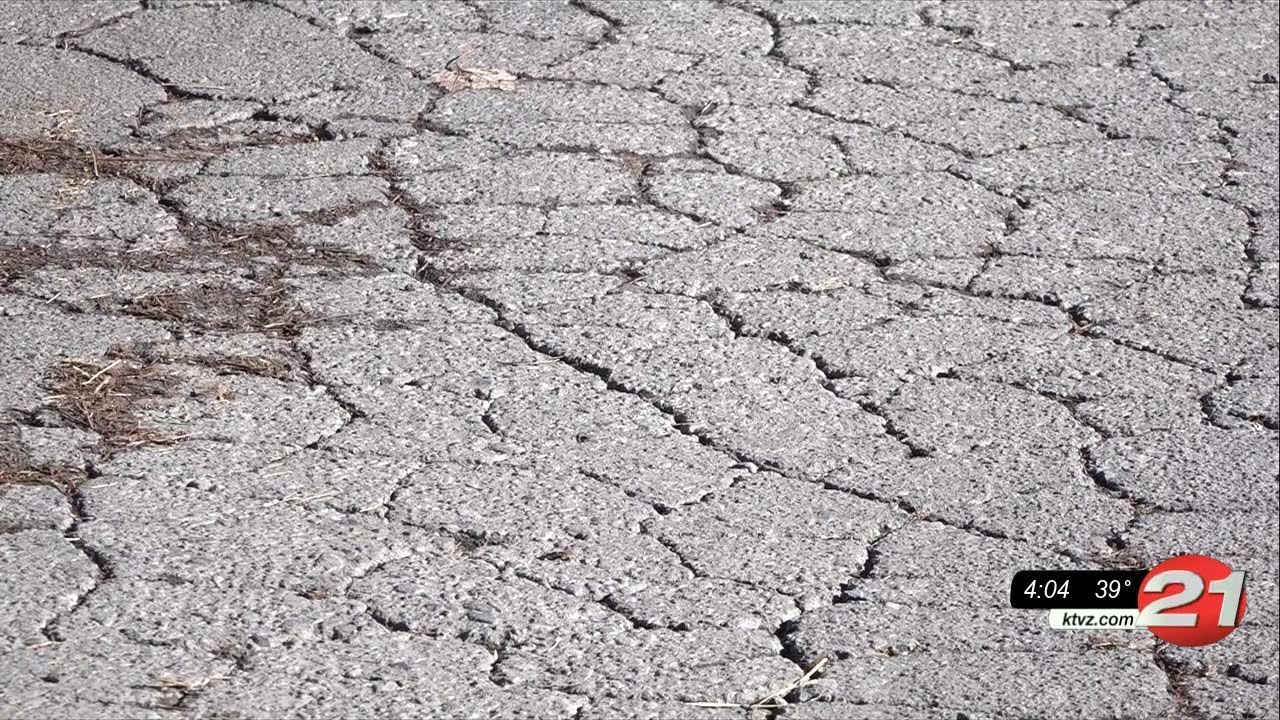
"So this section is not as bad as that other block there,” Abbas said. “This is more just kind of some block cracking. You can see some crack seal which is in relatively decent shape."
There's also another benefit to this new type of street work.
"It's an eco-friendly treatment, and what I mean by that is for about every lane mile, we're keeping 250 tires out of going to the landfill," Abbas said.
The project is on Wednesday night's Bend City Council consent agenda.
Intermountain Slurry Seal, Inc. was selected to supply chips for this year's work, at a cost of $414,414. The project's goal completion date is August 28.

Pollution from car tires is killing off salmon on US west coast, study finds
https://www.theguardian.com/environment/2020/dec/03/coho-salmon-pollution-car-tires-die-off
I would think a sealed road surface is different, but we can ask, thanks.
I hope so.
Well, I was perfectly ready to say that this seems like a very good idea but the Salmon, the Prima Donna of the fish world. What’s up with those things? It just seems unfair to the diminutive trout, the lowly carp and working class catfish.
Seriously, car tires are nasty things to just throw away, any good secondary use for them is a win win.
Cough some tiny rubber particulate up and take it to the plant where they make the road sealer. I’m sure it’s in everyone’s lungs that lives around cars like in Bend. We could all chip in and maybe we could squeeze some out of the fish as well. Amazing how much damage cars cause society that stays out of news.
I read the same articles saying the worn rubber residue from tires will run off into the sewer drains and into our tributaries and really hurt our fish populations. I was hoping that the science-based studies would help tire manufacturing companies move to a more environment-friendly material. Putting recycled tire sealing on top of roadways that will get heavy wear from studded tires and normal high use seems to be going in the wrong direction? Our fish need all the help they can get….
Commercial fishing is what is killing fish, stop it.
And Japanese drift nets, indian gill nets, and over populated sea lions don’t?
If memory serves me, there was a big recycled tire paving project up around St. Helens Oregon that started bleeding toxic materials out and the whole thing plus the roadbed had to be removed. This sounds like the high school track materials used around the state.
Any idea if this has been tested somewhere with snow removal and de-icers?
Well, we linked to the issue summary which has a lot of details.
Not a mention in the issue summary.
I was wondering the same thing. They have been doing this Arizona for years, but I heard the mild climate made it possible and successful. Freeze then thaw along with plowing and magnesium chloride, I guess we will see if it is successful here.
In a first of its kind project, Ha. Someone forgot about GOOGLE.
SPOKANE — It sounded like the perfect solution.
State and county officials reasoned that shredding 1.4 million used tires for use in road construction would alleviate a potential fire hazard in the storage yards where they were being kept.
The tire-chip material went into a road bed near Pomeroy in Garfield County late last year.
But within weeks, it began to smolder, emitting smoke and even flames at the road surface. Removal cost millions and the shredded tires are now buried in a landfill a few miles from where they were stored before the failed experiment.
Federal highway officials have ordered a national moratorium on shredded-tire highway projects until someone can explain what went awry in Washington.
It’s a first in Bend, that’s what it’s intended to say.
How old is that story? These aren’t ‘shredded’ tires but … you’d hope everyone’s done their due diligence.
A quick Google search shows that the article was published in the Seattle Times in July of 1996.
I’m sure they have, just like they did with the overpass in La Pine;)
That is about when they used it for a base under the asphalt or concrete
I wonder what the rolling resistance will be from this type of surface.
Neither the article nor the issue summary mentions any analysis of water quality or air quality mpacts. Seems the environmentally friendly term is for waste only. The work by the University of Washington should be accounted for before moving forward. Are there any plans to try this as a demonstration and conduct air and water quality sampling together with longevity with snow plows and Deicer in select places that would do least damage if failures before going full hog?
They are trying it on lesser-traveled streets, as we reported. Bend has hundreds of lane miles.
Methinks the law of unintended consequences will bite the city of Bend in the backside.
Meant Washington State University per the above commenter’s article link—is there no way to edit comments any more Barney?
Sorry. Hoping we can move to a more robust commenting system before too long.
