Football head injuries may cause low testosterone years later


During NFL season, millions of viewers tune in to watch the monster tackles. Most know those hits can cause brain damage known as chronic traumatic encephalopathy (CTE). Less well known is that big, brain-bruising concussions (and smaller, repeated cranial collisions) can also damage the pituitary, a pea-sized gland at the base of the brain that regulates hormones including testosterone.
In some men, pituitary damage can contribute to fatigue, mood changes, sexual problems, and other symptoms long after the injury itself appears to have healed.
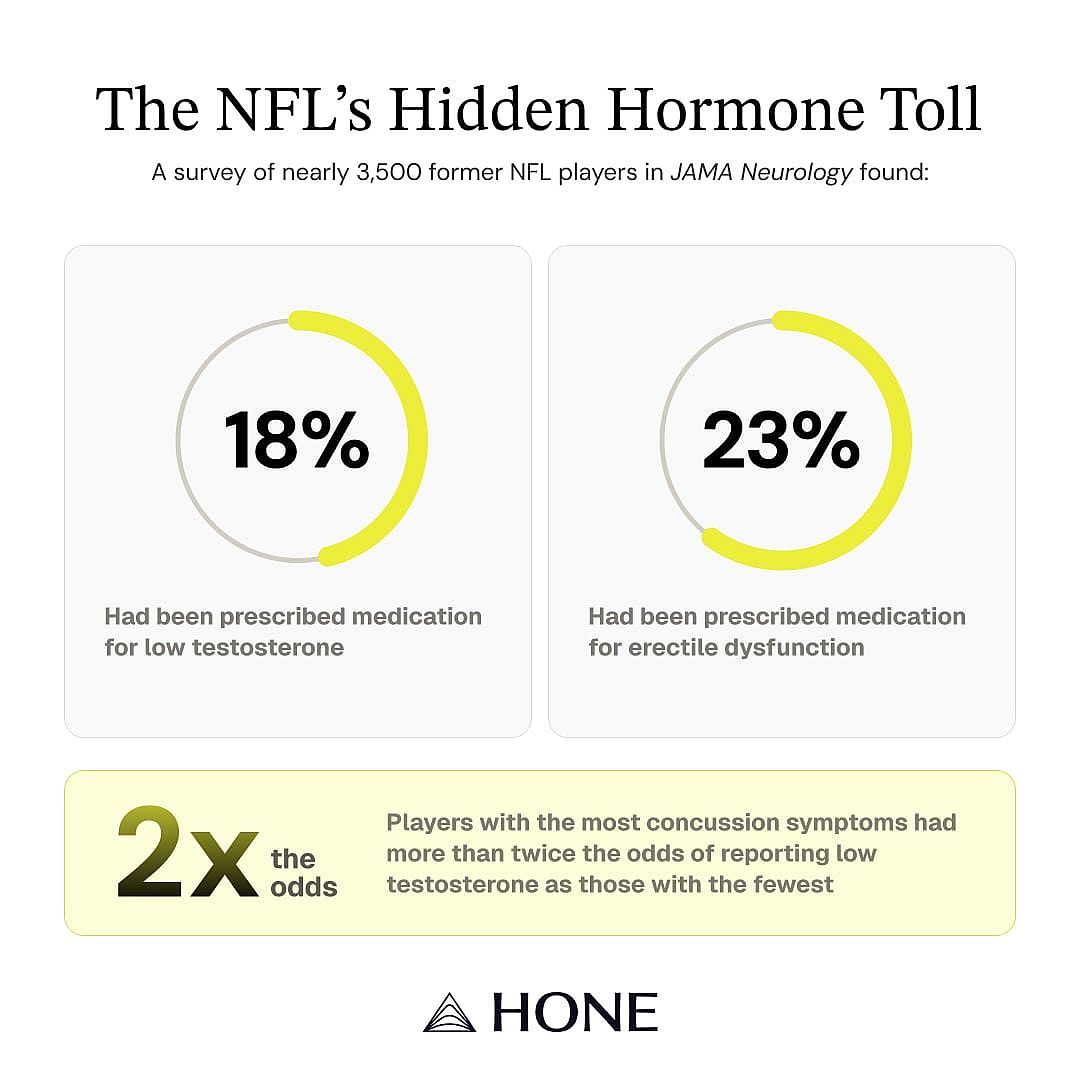
In a 2019 survey of nearly 3,500 former NFL players in JAMA Neurology, 18.3% had been prescribed medication for low testosterone, and 22.7% reported the same for erectile dysfunction, a common symptom of testosterone deficiency. Players who had the most concussion symptoms during their career had more than twice the odds of reporting low testosterone as those with the fewest symptoms.
Hone Health examined how head injuries from contact sports like football can cause men to have decreased levels of testosterone years later.
The concern extends beyond professional football. About a million American teens play high school football each year, and hormone problems related to head trauma may not become apparent until years later. Researchers don’t yet know how often football-related concussions or repeated smaller hits cause lasting pituitary problems, but endocrinologist Dr. Steven Wise believes that “probably 20%” of men he sees in his practice, especially men in their 30s and 40s with low hormone levels, had some kind of injury to the pituitary or the hypothalamus during high school or even earlier.
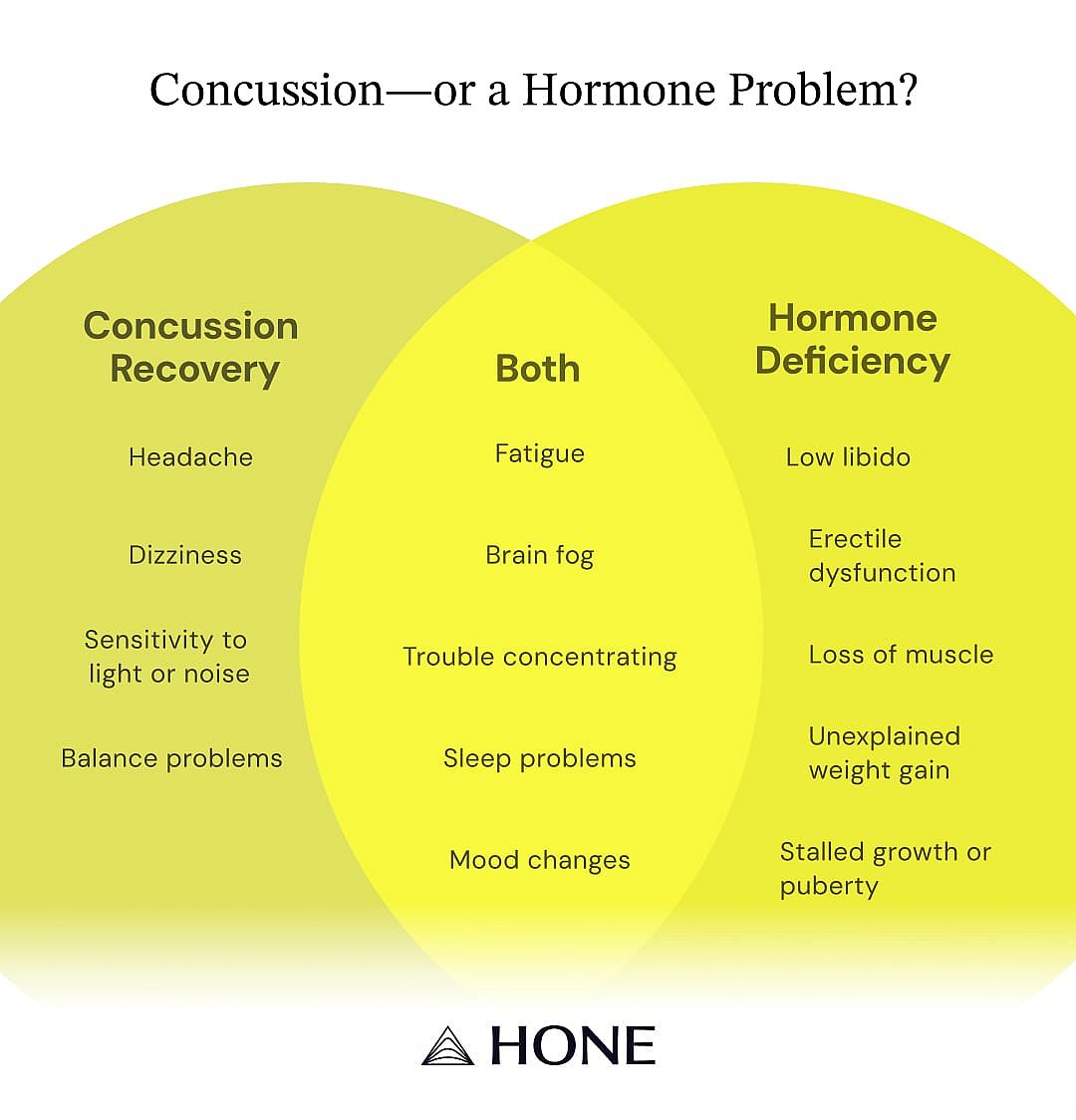
By the time they come in, Wise says, low testosterone symptoms such as fatigue, brain fog, low libido, and mood changes may be mistaken for ordinary aging rather than traced back to the old head injury.
Testosterone production starts in the brain. The hypothalamus signals the pituitary gland, which releases luteinizing hormone (LH), which in turn tells the testes to produce testosterone. Damage anywhere along that signaling pathway can cause testosterone levels to fall.
The pituitary gland is especially vulnerable to sports-related head injuries because of its position at the base of the brain. “When you look at the pituitary gland, you’ve got a gooey little gland sitting on a thin stalk with a fragile blood supply down in a bony hole with sharp edges,” said Wise. “When the skull stops moving, the brain keeps moving forward until it can’t anymore. The thin stalk attached to the pituitary gland can stretch as the brain lurches forward. That can damage the stalk, the pituitary gland, or both.”
Head trauma can also disrupt blood flow and trigger inflammation that reduces the pituitary’s ability to secrete hormones, adds neuroendocrinologist Dr. Maria Fleseriu. The resulting hormonal disruptions, she says, can mirror the symptoms of concussion recovery.
“After a concussion, people may still have fatigue and trouble concentrating. They can’t sleep. They have mood changes and low energy,” Fleseriu said. “All of these symptoms could have come from a hormonal deficiency, so which is the cause — that or the concussion?”
How Often Do Head Injuries Lead to Low Testosterone?
Researchers can’t give an exact risk for football players or for someone who has experienced a routine sports concussion. However, studies on traumatic brain injury (TBI) suggest that roughly 28% to 32% of people with head trauma develop some form of pituitary dysfunction. More severe injuries generally carry greater risk: One meta-analysis found hormone disruption in more than 35% of severe TBI cases, compared with around 11% of moderate cases and 17% of mild cases.
“Not every concussion is going to cause hormonal problems, especially mild ones,” Fleseriu said. “But if it’s a significant one, we should check.”
Wise believes that smaller, repeated head injuries may have a similar effect. “If you pull kickboxers, football players, people with repeated trauma to their head in a random sampling, you will find subtle changes in pituitary function,” he said. “The more injuries you get on top of other injuries, the more trouble you have.”
Although some of the damage may resolve on its own, often within a year, that can be a long hormone disruption for teens going through puberty. If a young athlete takes a significant hit and puberty or growth seem to stall, Fleseriu recommends an evaluation with an endocrinologist around six months postinjury.
What to Do If You Have a Head Injury History
Hormone disruptions from head injury can take years to surface — and don’t always follow a predictable pattern. “Some people take a couple of years to develop problems,” Wise said. “Others develop problems right away and then heal over a few years.”
If you played a contact sport and are now experiencing fatigue, low motivation, brain fog, mood changes, or weight gain, Wise recommends telling your doctor about any head injury history. These symptoms have many possible causes, but an old injury may be a relevant part of the picture.
“I can’t tell you how many people I’ve seen who were tired or who lost their motivation or who were moody, irritable, fatigued, have brain fog or weight gain, and doctors were dismissive, saying, ‘Yeah, welcome to being 50,’” he said.
Blood tests can’t prove that an injury from years ago caused low testosterone, but they can show whether pituitary signaling is impaired. A hormone test looks at markers like free testosterone, total testosterone, and LH.
If testing suggests low testosterone or a hormone imbalance, a physician will determine whether treatment with testosterone replacement therapy is appropriate. “You can give people a low dose of the hormone you think they’re missing, as long as you’re keeping them in the normal range, and see if they get better,” Wise said.
This story was produced by Hone Health and reviewed and distributed by Stacker.
