Oregon invests $10 million in landscape resiliency to combat wildfires
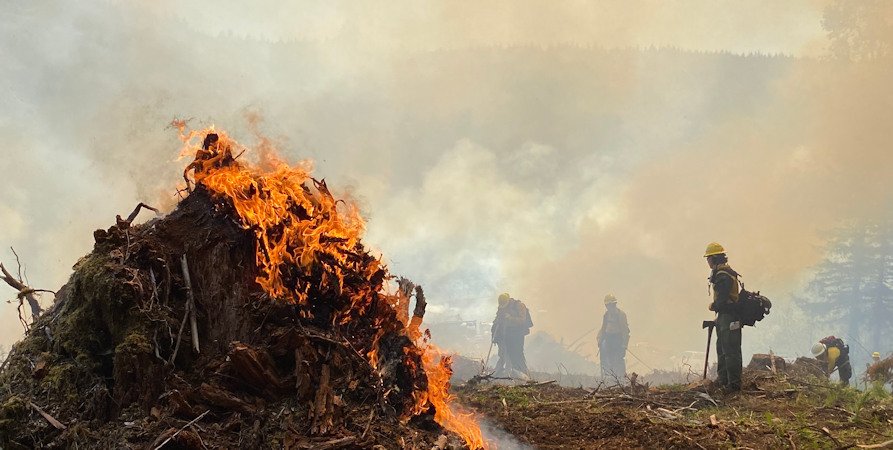

The Oregon Department of Forestry announced an investment of $10 million today for landscape resiliency projects across Douglas, Grant, Jackson and Josephine counties. The grant funding will target more than 6,400 acres to reduce hazardous fuels, restore fire-adapted ecosystems and protect local communities from catastrophic wildfires.
The state investment comes after wildfires have burned more than 2 million acres across Oregon so far in 2026. Forest Resources Division Chief Josh Barnard at ODF, emphasized that the state's landscape resiliency approach serves as a primary investment hub to reduce wildfire risk across public, private and Tribal lands before fires begin.
“With more than 2 million acres burned by wildfires in Oregon so far in 2026, this work has become more important than ever,” Barnard said. “Every responsibly managed acre helps reduce wildfire risk around communities and improves the long-term health of Oregon's forests and rangelands.” Barnard added that the funded projects demonstrate what can be accomplished when local communities, landowners, Tribes and federal agencies work toward shared natural resource goals.
The Oregon Department of Forestry is focusing on broader forest resiliency by reducing tree density in select areas while planting trees better adapted to changing environmental conditions. Christine Buhl, an ODF forest entomologist, explained that the agency is developing new diagnostic tools to assist landowners with adaptive management. “ODF is improving methods to enhance landscape resiliency to better protect our forests from large disturbance events,” Buhl said. “We are building tools to better diagnose problems and offering strategies and resources to landowners to help them do adaptive management. This includes metrics to help identify site and climate conditions and where stress is predicted. These tools and identification processes are a part of how we prepare and recover from stress from heat and droughts, insect pests and diseases and wildfires.”
In Douglas County, ODF is investing $1.29 million through the Little River Landscape Resiliency Project. The initiative will establish strategic fuel breaks along Lane Mountain, the Little River drainage and Cavitt Creek to improve firefighter access and lower wildfire intensity in high-risk zones.
A grant of $4.85 million will support the Hotshot Rx Connect project in Josephine and Jackson counties. The funds will be used to thin forest stands and conduct prescribed burns across nearly 2,700 acres, improving forest health and clearing emergency access routes.
In Grant County, ODF is allocating $3.46 million to the John Day Landscape Resiliency Project. The funding will support forest thinning, the removal of junipers that compete with valuable timber trees for water and long-term wildfire risk reduction planning across 3,400 acres. As part of this work, a 57-acre prescribed burn was recently completed on private ponderosa pine forest near Monument by the Prescribed Burn Association, a collaboration involving Oregon State University, ODF, the local Soil and Water Conservation Service and local landowners.
The effectiveness of coordinated landscape treatments was demonstrated during the 27,491-acre Akawa Butte Fire, which burned through thinned ponderosa pine forest and cleared roadsides near Black Butte Ranch treated under the Central Oregon Shared Stewardship Project. Jenna Nelson, state initiatives grant coordinator for ODF, noted how the prior treatments aided firefighters during the burn. “Because of the work done in this area, firefighters were able to fight the fire from safer places along roads where there was less fuel,” Nelson said. “It also allowed fire fighters to immediately backburn the treated land without having to prepare it first, saving precious time. The back burns consumed fuel ahead of the advancing fire front, stopping it in those areas. Because treated areas burned with lower intensity, they will also have a better chance at recovering, with a high percentage of trees surviving.”
The current round of investments will help establish new landscape plans that align priorities among ODF, the USDA Forest Stewardship Program, the Natural Resources Conservation Service and the Oregon Department of Fish and Wildlife to guide future funding. ODF encourages landowners and local partners interested in participating in future landscape resiliency projects to contact their local department office.
