Oregon missing unified data collection, complaint process for farmworkers, report says
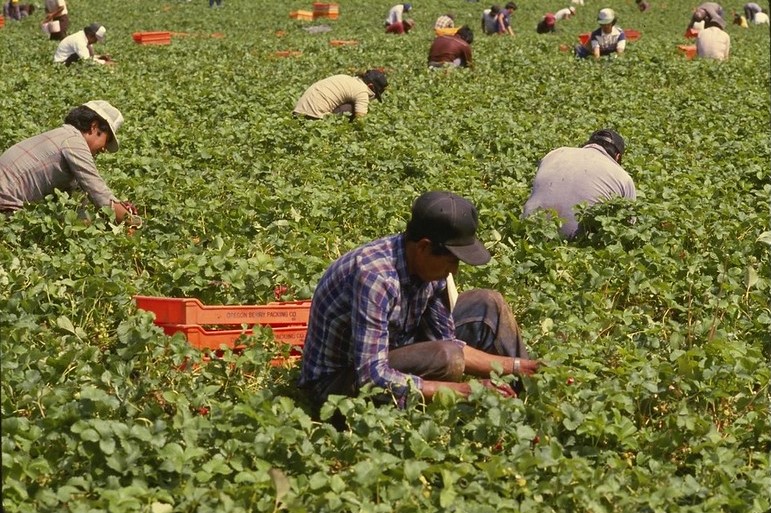

By Shaanth Nanguneri, Oregon Capital Chronicle
SALEM, Ore. - Oregon lacks a unified system to track data and handle complaints about working conditions from farmworkers who make up the backbone of the state’s multi-billion dollar agricultural industry, a new state report found.
The 75-page report released last week by the Legislative Policy and Research Office comes in response to a 2025 state law mandating state analysts review the state’s agricultural industry and its methods for administering labor standards.
A key area of concern for analysts was a lack of interagency coordination on enforcement of some of the nation’s strongest farmworker legal protections. Those protections extend to issues such as pesticide use, heat safety and housing security, as well as broader state standards for the minimum wage and anti-discrimination statutes that protect Oregonians regardless of their nationality or immigration status.
While there is some coordination among agencies such as the Department of Consumer and Business Services, the Oregon Occupational Safety and Health Division and the Oregon Department of Agriculture, the report says that collaboration is limited and that “in some areas, state law does not require agencies to share complaints.” It doesn’t specify which areas.
“Agencies coordinate where their responsibilities intersect, but no single framework directs how agencies should coordinate on farmworker protections,” the report reads. “Coordination happens mainly through statutory duties, complaint referrals and interagency agreements.”
Further complicating the ability to track how farmworkers are faring in the state is data on Oregon’s agricultural industry that the report called “fragmented, lagged and incomplete.” That makes it harder for the state to track changes in employment trends, the well-being of family farms, the efficacy of temporary visa programs and the use of farm labor contractors. In 2022, more than 80% of farms in Oregon were family farms with gross cash income from their farms under $150,000, according to the report.
‘These measures must be assembled from separate data sources that are built for different purposes, released on different schedules and in different formats, and use different definitions and classifications of farms, employers, and farmworkers,” the report reads.
The new report’s findings on a lack of a coordinated response to support farmworkers comes ahead of another highly-anticipated report on agricultural overtime set to be delivered to lawmakers at the end of November. Those findings will detail the economic impact of a 2022 state law phasing in more stringent overtime standards for farmworkers who don’t benefit from federal protections on overtime. Lawmakers could revisit the law in the 2027 legislative session.
This year, Oregon’s agricultural overtime law guarantees overtime for working more than 48 hours a week this year. Overtime will kick in after 40 hours beginning next year.
A 2025 analysis by researchers at Oregon State University has shown that while the law has increased hourly wages, it has resulted in less overall money to agricultural employees. Other states such as Colorado have changed their agricultural overtime provisions to apply to work beyond a higher threshold of 56 hours a week.
Reyna Lopez, executive director of Pineros y Campesinos Unidos del Noroeste, the state’s leading farmworker union, said farmworkers have historically not enjoyed the same fair labor, wage and safety standards that other workers have received.
While Oregon has since taken more action to improve their conditions, she said more needs to be done on issues such as piece rate wages, which involve money paid for units of work produced or specific services rather than time spent through an hourly or annual wage.
“Even still, farmworkers are not paid at piece rate wages when they are allowed a break. They are excluded from collective bargaining protections under state or federal laws. They are still forced to live in inadequate housing where they do not even have indoor plumbing or cooking spaces in their living spaces,” she wrote in a statement. “Our state must ensure that farmworkers actually experience the protections that were meant for them.”
The Oregon Farm Bureau, which represents farmers and ranchers across the state, saw the report as an affirmation of the “similar rights and protections” afforded to Oregon farmworkers compared to other workers. Jenny Dresler, a spokesperson for the group, said in a statement that the lack of data on farmworkers mentioned in the study isn’t unique to the agricultural sector.
“Several agencies have jurisdiction over these workplace protections, but Oregon agriculture isn’t unique in that regard,” she said. “Workers in the construction, manufacturing, retail, insurance, health care and restaurant and lodging industries all face a similarly disjointed regulatory environment with multiple agencies directing and enforcing workplace protections. Multiple agencies enforce different workplace laws for many sectors of Oregon’s economy.”
